
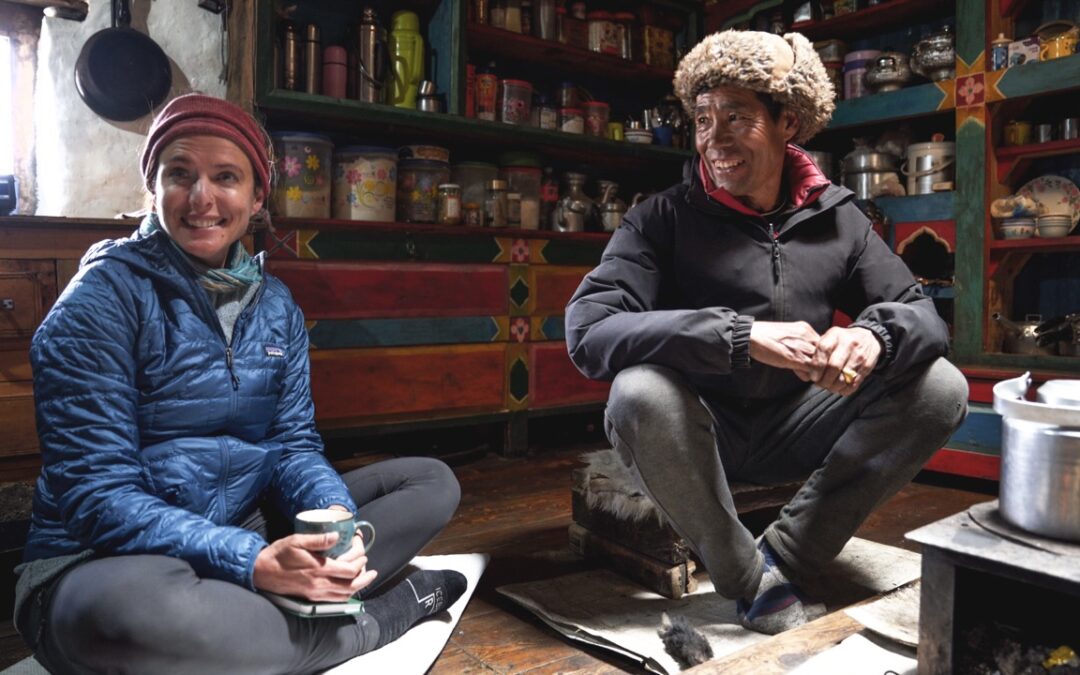
by Dr. Natalie Schmitt, Conservation Biologist, Explorers Club 50 (2022), Founder/CEO @ WildTechDNA Inc.
All photographs are courtesy of Dr. Natalie Schmitt and Brad Clement
This week’s blog is a special one.
We’re honoured to share a powerful reflection from Dr. Natalie Schmitt, conservation biologist, storyteller, Explorers Club member, Founder and CEO of WildTechDNA Inc and Board member at Pangje Foundation. Natalie recently joined a remarkable team on an expedition to Phu, Nepal — a remote Himalayan village where people and snow leopards share the same sacred ground. What unfolded there was more than research — it was relationship-building, through art, listening, and wellbeing. In this moving essay, Natalie invites us to rethink conservation not as control, but as connection.
What the People of Phu Taught Us: A New Model for Conservation Born in the Himalayas
I’ve spent most of my career chasing what’s rare and elusive — from Antarctic blue whales to snow leopards in the Himalayas.
But what I’ve really been chasing all along is connection!
After more than three decades in conservation science, I’ve come to realise that our biodiversity crisis isn’t simply ecological — it’s emotional.
And the emotional part is what has driven our increasing disconnection from nature and from one another.
I was trained to believe that science held the answers. But when humans are at the heart of the problem, data alone can’t bring about change.
Real transformation begins through empathy, story, and shared experience!
That realisation led me back to Nepal — a place where I had worked for many years with the Pangje Foundation on community-based snow-leopard conservation with a focus on education and training the next generation of wildlife warriors.
Over time I’d come to see that lasting protection of wildlife really depends on understanding people — their values, wellbeing, and daily realities.
…and I wanted to explore a different way of listening.
I had been deeply inspired by Joe Rohde, the legendary Disney Imagineer and creative force behind Disney’s Animal Kingdom — a park built on the idea that humans and the natural world are inseparable.
After retiring from Disney, Joe began working with Inuit communities in the Canadian Arctic, using collaborative mural painting to explore relationships between people and narwhals.
That project’s spirit of reciprocity and storytelling stayed with me, and I was excited at the thought of whether a similar creative approach could help reveal the deeper layers of human–nature connection in another fragile, sacred landscape: the Himalayas.
Joe thankfully jumped at the opportunity, having spent multiple art expeditions to this part of the world. Along with Joe, I also invited Explorers Club members, filmmaker David Borish, wellbeing specialist Beth Allgood from the OneNature Institute, and Tom Acomb (AOA), joined by Pangje Foundation President and expedition leader Brad Clement and our local partners in Nepal — Gokul Lama, Narendra Shrestha, and Leylu Gurung. Together, we planned an Explorers Club Flag #83 Expedition to test whether combining art, science, and wellbeing could offer new insight into coexistence between people and wildlife.
Why Phu
We chose Phu because it embodies the paradox at the heart of conservation. Perched at nearly 4,100 metres in Nepal’s remote Manang District, the village lies within the Annapurna Conservation Area — home to both people and predators.
Here, snow leopards and yaks share the same high pastures, and that coexistence carries real cost. Loss of livestock brings hardship to families who depend on their herds for survival. Yet this is also a place where spiritual teachings call for the protection of all life.
The people of Phu live between those two realities: devotion and difficulty, reverence and resilience. Their story reflects a challenge faced by mountain communities everywhere, balancing livelihood with compassion, survival with coexistence.
That is what made Phu the perfect place for this experiment. If we could understand how wellbeing, belief, and daily experience shape coexistence here, in one of the harshest environments on Earth, perhaps we could begin to imagine a new model for conservation everywhere.
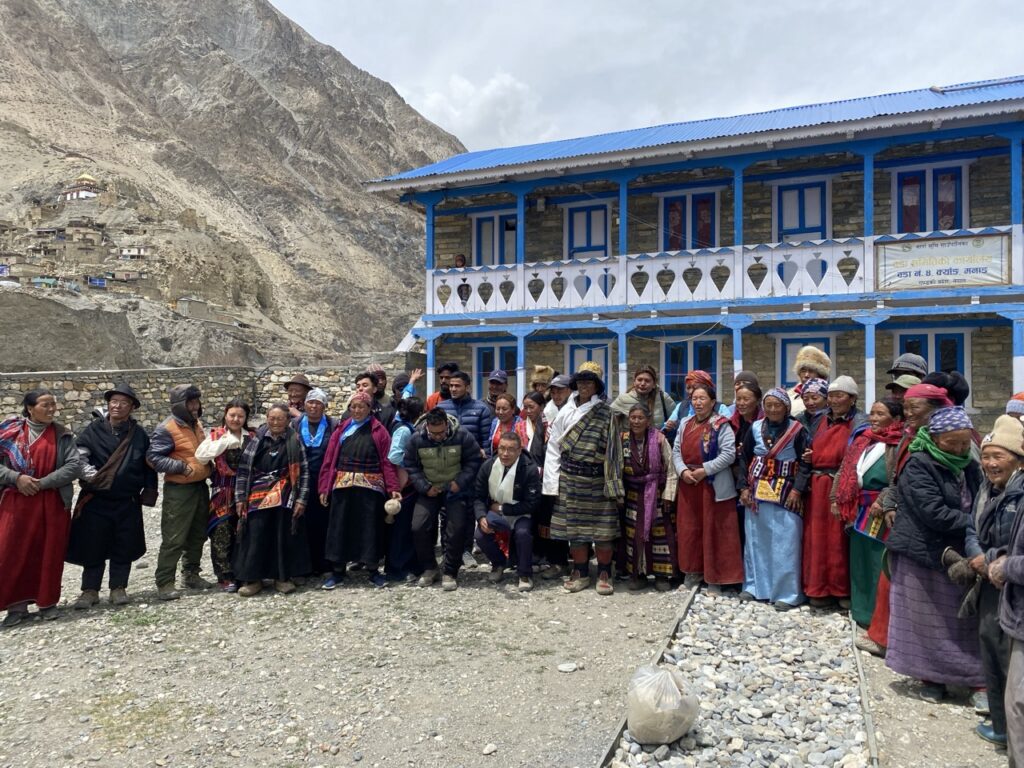
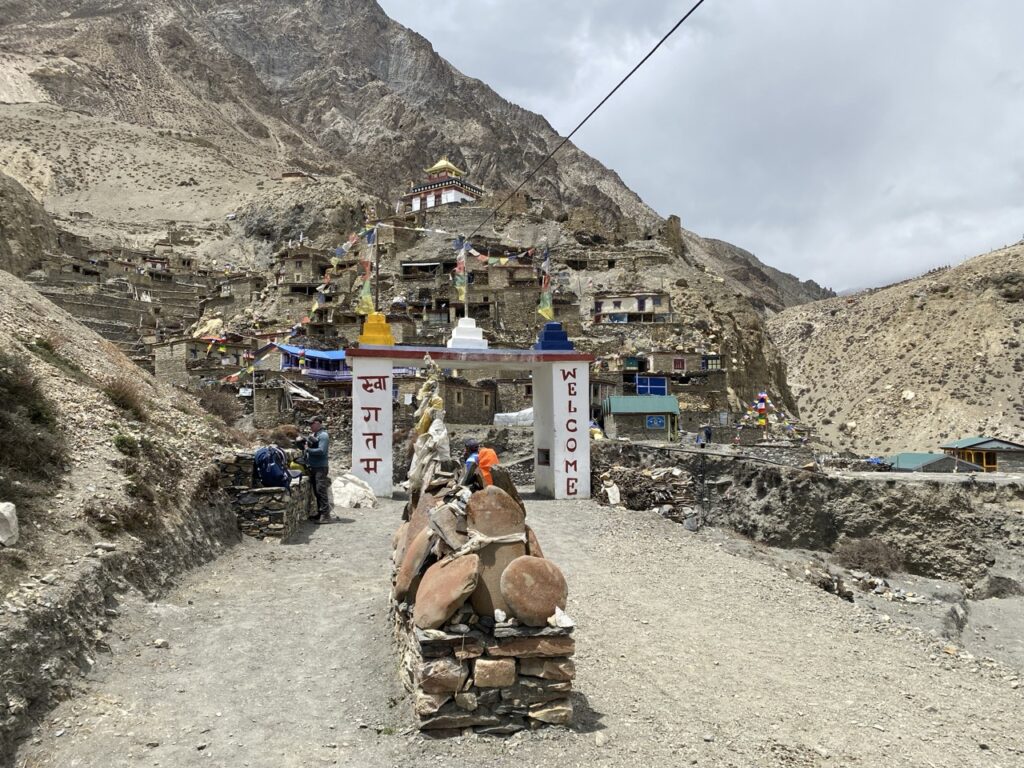
Photo Credits: Dr. Natalie Schmitt
Arrival in Phu
After several days of trekking through narrow valleys and over wind‑carved ridges, we finally reached Phu — a Tibetan-heritage village of fewer than fifty residents near the border with Tibet, where time has seemingly stood still. For centuries, its people have survived through herding, trade, and barley cultivation in one of the most remote regions of Nepal. Years of migration, economic change, and harsh climate have thinned the population, yet the community’s identity and spirituality remain strong.
Soon after our arrival, we were invited to a formal welcome in the community hall. The entire village came, dressed in their traditional formal attire. They sang to us — the voices of men and women filling the stone hall — and village representatives spoke about how much it meant that we had come, not simply to conduct research, but to listen and help share their story.
After the ceremony, we were taken to the monastery, high above the village, where the monks performed a puja — a blessing to welcome us and to ensure harmony during our stay. It was deeply moving to sit among them as the drums sounded and incense drifted through the air.
None of us had ever received a welcome so open, so heartfelt, or so sincere. For a community long cautious of outsiders, the warmth and generosity of that day were profoundly humbling. It created a sense of trust that shaped everything that followed in Phu.
The Square Becomes a Studio
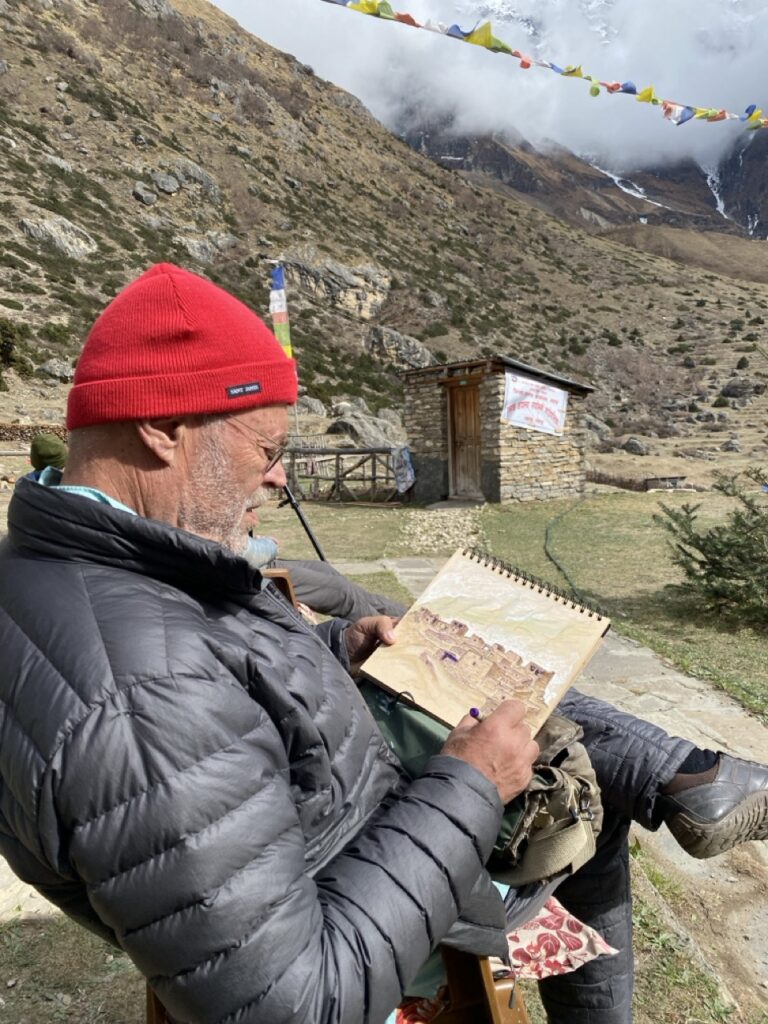
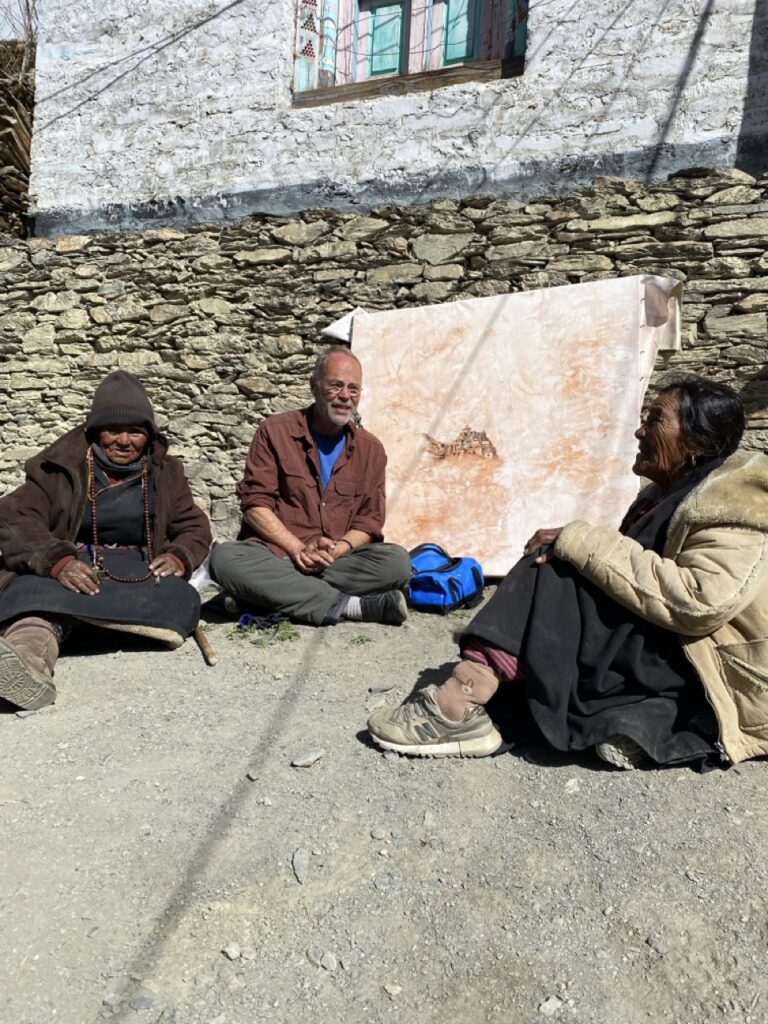
The next morning, Joe set up his easel in the open village square. At first, the space was quiet — the air thin and still, the sound of prayer flags snapping in the wind.
Gradually, a few elders began to approach. They stood beside him, watching in silence at first, before beginning to offer gentle suggestions — a mountain that should rise higher, a monastery that sat slightly to the east, a yak herder who should be shown crossing the pass. Bit by bit, conversation unfolded.
It was the elders who shaped the mural in those early days. They carried the collective memory of Phu — the stories of herding, harvests, and sacred festivals, and of the teachings that tie people to this land.
At the time of our visit, only one child was in the village; the rest were away in Kathmandu for schooling. The mural thus became not just a record of life as it is, but a way of preserving what might soon be forgotten; a bridge between generations separated by geography and time.
Over the following days, more villagers came to share their thoughts; what should be shown, what mattered most, and what must not be lost. The mural grew through these exchanges, each brushstroke guided by the community itself.
Photos Credit: Dr Natalie Schmitt
A Parallel Inquiry
While Joe painted, Brad Clement and I conducted a series of formal interviews with community members. We ran the two processes side by side, structured interviews and the open art dialogue, to see what each might reveal.
The interviews followed every ethical protocol: consent forms, translation, carefully phrased questions. Yet responses were brief and cautious. The people of Phu are modest and measured in speech; it is not their custom to speak at length about themselves.
Although the interviews provided valuable factual information, they revealed little of the emotional landscape of the community. Around Joe’s easel, however, a different kind of conversation unfolded: spontaneous, humorous, reflective. Stories emerged that might never have surfaced in a questionnaire.
The contrast was clear: formal interviews produced data, but art created relationship.
It allowed meaning to arise naturally, through participation rather than interrogation.
Listening Through Wellbeing
Alongside the art and interviews, we piloted OneNature’s Wild Happiness Survey, designed to understand wellbeing in conservation landscapes. The average wellbeing score in Phu was 95.7 out of 100 — exceptionally high.
At first glance, this might seem surprising. Life in Phu is harsh: winters are long, resources are limited, and the village is a day’s walk from the nearest road. Yet the data revealed a profound truth: that wellbeing does not depend on comfort or material wealth, but on connection.
Residents expressed strong satisfaction with life, deep trust in one another, and pride in their community. Their wellbeing stems from the strength of their social fabric, the way they support one another, share burdens, and find meaning in their traditions and landscape.
The same outlook extends to wildlife. The people of Phu often recall the words of their former Lama, who encouraged the community to stop hunting and protect all living beings as part of their spiritual duty. His guidance remains deeply respected and continues to shape how they live. People here do not separate themselves from the animals they share the landscape with; they see them as part of an interconnected whole.
In many ways, their culture already embodies what modern conservation strives for, a seamless integration of wellbeing, ethics, and ecological balance. Their relationship with nature is based not on regulation, but on reverence.
As the mural neared completion, we asked the community a simple question:
“If you could describe yourselves as a village in one line, what would it be?”
After thoughtful discussion, they agreed on a short Tibetan phrase, written by Lama Jamphl Gyatso, to appear across the painting:
ཆོས་ཀུན་རང་བཞིན་གྱིས་འབྲེལ། — “All Things Are One.”
They explained that these words express who they are, people who see no boundary between themselves, the mountains, their animals, and the wild beings that share their land. It’s a worldview rooted in Buddhist teaching and daily practice, where life and landscape are inseparable.
That single line, chosen by the villagers themselves, encapsulates what our wellbeing results also revealed: that connection, with one another and with nature, is the foundation of happiness, resilience, and conservation itself.
The Phu wellbeing data and cultural ethos together suggest something vital: the roots of conservation success lie in community cohesion and spiritual alignment with nature, not simply in external enforcement.
There is so much the world can learn from them.
From Painting to Sacred Space
When the mural was completed, the entire village gathered to see it revealed at the monastery. It was not simply a painting; it was a record of a people and their way of life, past and present.
The mural told the story of Phu’s world: the barley fields terraced into steep slopes, yak herders crossing high passes, monks in red robes turning prayer wheels, snow leopards watching silently from the cliffs above. It captured the harmony between people, animals, and mountains, and the sacred rhythm that has sustained this place for centuries.
But woven through the mural was also something more, a quiet sorrow reflective of many ancient Himalayan communities. The elders asked that it show the empty homes of those who have left for the cities, and the paths leading away from the valley.
They spoke of their fear that, as younger generations move to Kathmandu or abroad, their culture, and the deep connection to nature it embodies, may be disappearing.
Standing before the finished painting, I felt the weight of that truth. Their culture has, in many ways, protected this landscape for centuries, their faith, their ethics, their care. And I found myself wondering: If their people go, who will protect the snow leopards?
Every detail in the mural came from the villagers’ own stories and memories. Together they created not just an image, but a living archive, a reflection of who they are, what they cherish, and what they stand to lose. As Joe later wrote:
“This mural may hold the most detailed record of Phu that exists — of its life, its beliefs, its environment, and the uncertainty of its future.”
When the mural was finished, the villagers made a collective decision to hang it inside their monastery, replacing a set of worn thangkas honouring the Kamapa Lama. The gesture was absolutely profound. The monastery is the heart of Phu, a place of prayer, guidance, and continuity. To place the mural there was to make it sacred, to enshrine their story within the spiritual life of the village.
It means that the mural now stands not as an artifact, but as a living testament, to their connection with nature, to the wisdom of their elders, and to their hope that future generations will remember what it means to live as part of the whole.
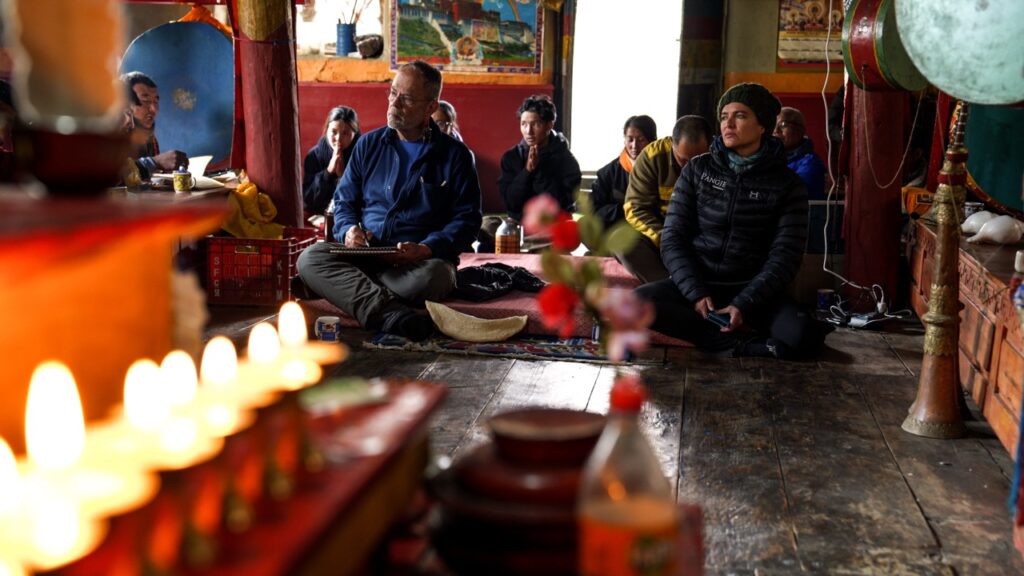
Photo Credit: Brad Clement
The Snow Leopard’s Message
On our final morning, snow‑leopard tracks appeared on the path below the village, guiding us away from Phu. Yet again I didn’t get to see our Ghost of the Mountain, but there was never any doubt as to the presence of this beautiful animal all around us… we saw signs of them everywhere!
For me, the expedition affirmed that art can be data, wellbeing can be a conservation measure, and listening is an act of transformation.
This was not outreach; it was relationship‑building, and it worked!
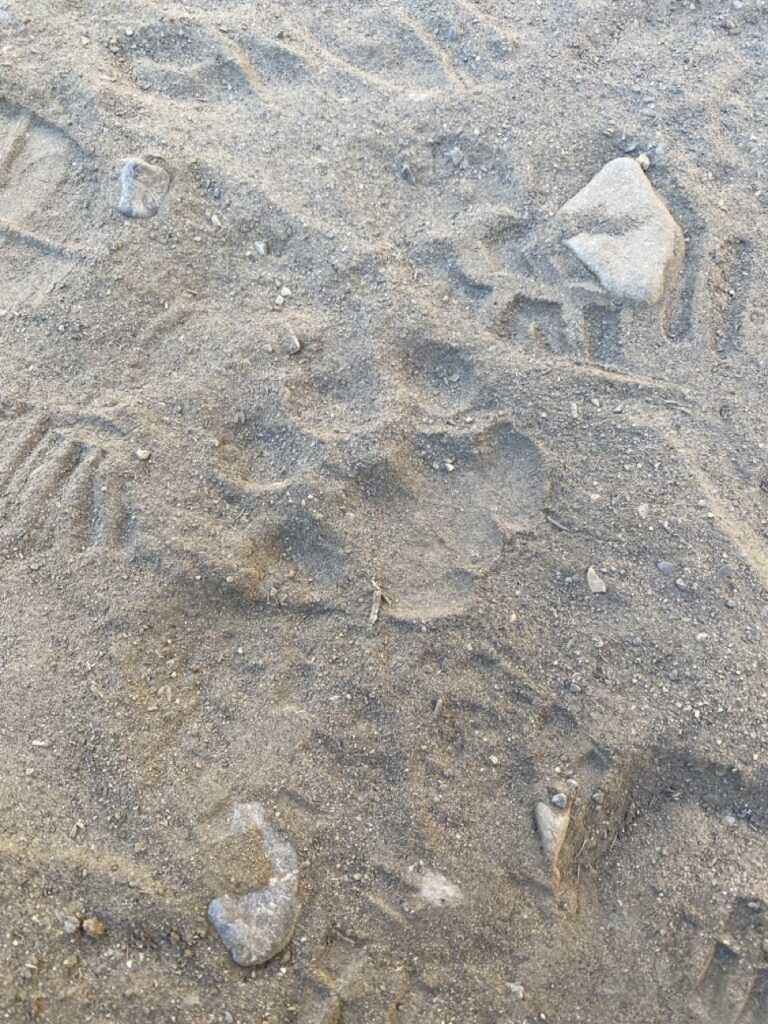
Photo Credit: Dr Natalie Schmitt
A Lesson for the Future
It is clear to me that conservation doesn’t begin with data or policy, it begins with people.
In Phu, I found my people: not only the community whose lives are intertwined with the land, but a wonderful team of new friends who understand that empathy and creativity are as essential to conservation as technology or data.
This project was born from a longing to understand more deeply, to learn from traditional knowledge, and to build connection where language and surveys cannot reach.
If conservation is to thrive, it must evolve from a discipline of control to a practice of connection — one that begins, perhaps, not with measurement, but perhaps with a mural, a song, and an invitation to listen.
Thank you for reading.
Dr. Natalie Schmitt
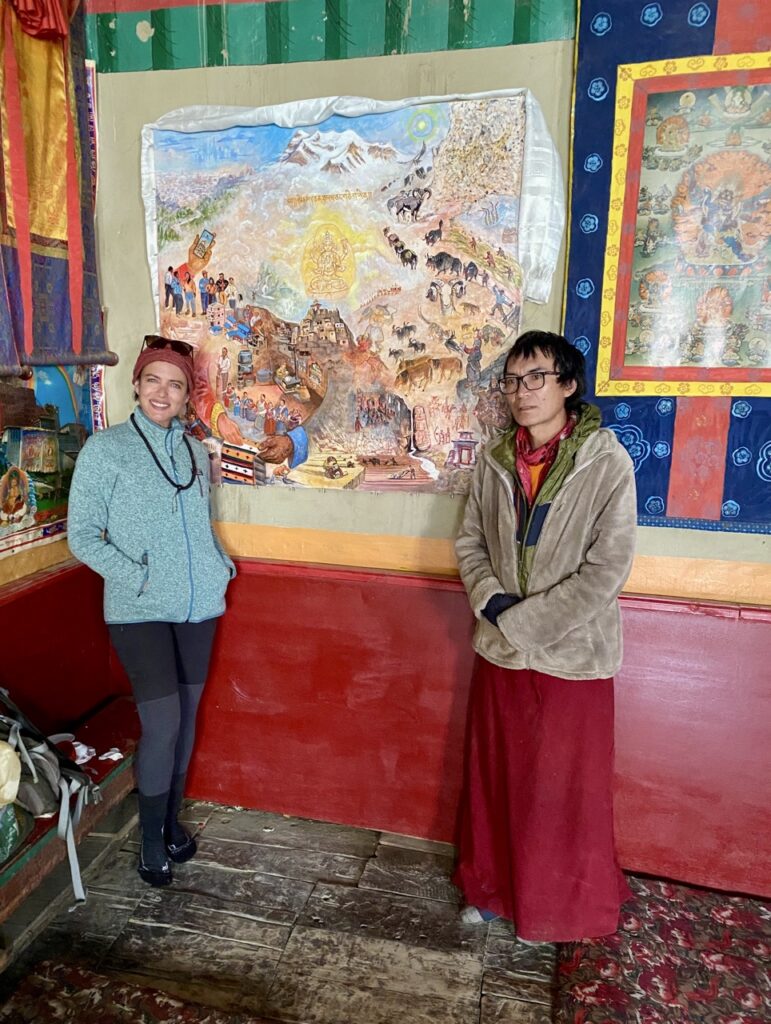
Photo Credit: Brad Clement