
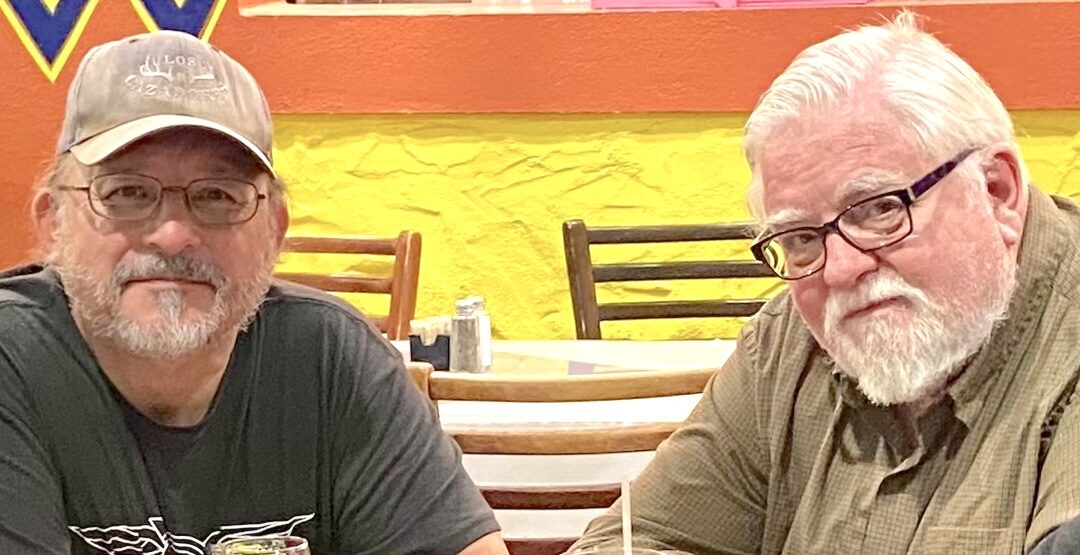
By Gary Perez, Principal Chief, Pakahua/Coahuiltecan Peoples of Coahuila y Tejas, and John Waugh, Executive Director, OneNature
OneNature, the Pakahua and Lipan Ndé (Apache), are collaborating in an exploration of what wellbeing looks like through Indigenous eyes, drawing upon experiences of Indigenous in the Rio Grande Valley and Edwards Plateau of Texas. We are adapting OneNature’s Wild Happiness methodology to better explain their approach to wellbeing. This will provide tools for communities long under threat of erasure to explain not only their needs, and also provide a way for all people to find and protect the space needed for the cultivation of wisdom.
For more than three centuries, Indigenous peoples in what is now Texas have lived under the constant threat of being erased – on paper, on the land, and in public imagination. Yet the Pakawan Coahuiltecan, Lipan Apache, and Comanche have not disappeared. They have persisted through a commitment to memory, to the ancestors, and to a way of walking in the world that refuses to separate wellbeing from the land, the sky, and community.
In mainstream culture, wellbeing is usually framed as an individual achievement: a matter of personal health, self-care, and perhaps therapy. For many Indigenous communities in Texas, wellbeing is something else entirely. It is the quality of relationships – between people, between generations, between humans and the Earth, and between the living and the cosmos. Healing arises from restoring those relationships, not just treating an isolated individual symptom.
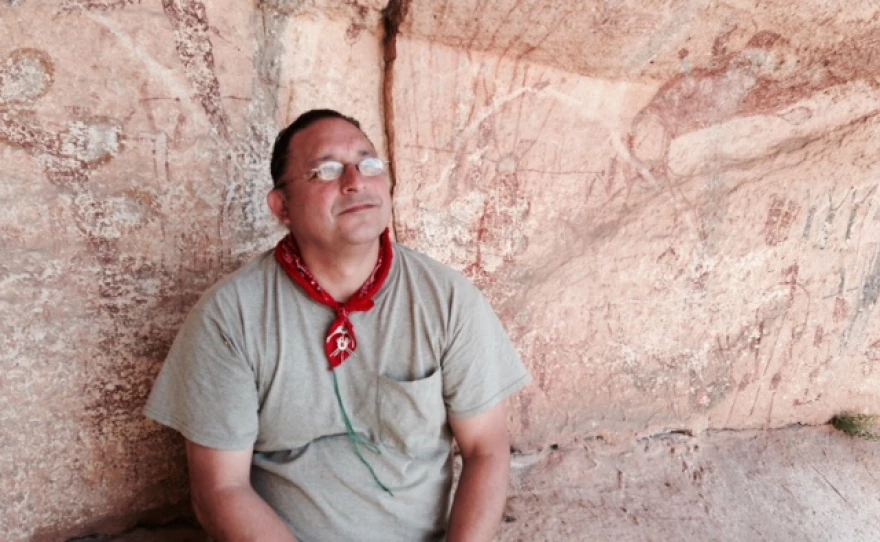
Gary Perez, Principal Chief, Pakahua/Coahuiltecan Peoples of Coahuila y Tejas
– Gary at White Shaman Mural
A central concept in this story is susto (Martínez-Radl et al, 2023), sometimes translated as “soul loss” or spiritual shock. Classified in psychology as a cultural concept of distress, susto emerges when the soul and body separate under conditions of deep fear, trauma, or violation. For Indigenous peoples in Texas, susto is not only a private ailment; it is transgenerational, carried across centuries of colonization, forced conversions, land theft, and violence. It is a name for the way a society can be unmoored from its own reality.
Some philosophers call this ontological loss—a collapse of the basic framework that helps us make sense of existence. Building upon Martin Heidegger’s work, philosopher Kevin Aho (2015) uses the term “ontological death” to describe a kind of annihilation that goes beyond physical destruction: the loss of meaning itself. When sacred sites are destroyed, when graves are desecrated, when stories are silenced and languages forbidden, a people’s model of reality is attacked. The result is what some have called ontological insecurity: a disorientation that comes from losing one’s collective self-knowledge and the places where that knowledge is embodied.
This is why memory matters so profoundly for Indigenous wellbeing. For Texas Indigenous communities, remembrance is not a nostalgic exercise or a cultural accessory; it is the core of survival. They have resisted disappearing not primarily through laws or formal institutions, but through practices of remembering—stories, ceremonies, kinship ties, and everyday acts that keep their world intelligible. Memory, in this sense, is sustenance.
Despite dominant narratives that declare most Texas Indigenous cultures “extinct,” communities have found ways to endure, often discreetly. When they could no longer live openly on their own terms, they adapted selectively, folding Indigenous meanings into imposed religious and political structures. The widespread devotion to the Virgin of Guadalupe, for example, can carry layers of Indigenous significance that run deeper than official church doctrine. Symbols embedded into mission architecture and the placement of churches at culturally meaningful sites are further examples of this quiet resistance.
Over time, as Spanish colonial rule gave way to U.S. and European settlement, another shift took place. Priests once claimed a monopoly on truth and meaning, enforced through religious doctrine. Later, bureaucrats, technocrats, and state enforcers took over as arbiters of “reality,” wielding power through procedures and documents instead of sermons. Under both regimes, Indigenous knowledge was treated as something to be suppressed, controlled, or overwritten. Many families adopted Hispanic identities as a form of protection in the face of state-sanctioned violence.
Yet beneath this imposed order, Indigenous kinship networks, oral traditions, and folkways continued to thread people together. Kinship often emphasized matrilineal lines and collective child-rearing, especially while surviving on marginal lands. Rituals and symbols were not empty performances; they were modes of participating in remembrance, re-anchoring identity in a deeper continuity. In collaboration with archaeologists, some communities are now engaging with findings that help recover knowledge of ancient travel routes and sacred landscapes, rebuilding connections to place that colonial systems tried to sever.
This work of cultural continuity is not only about the past. Many Indigenous partners in Texas understand themselves as living in “deep time,” where time is cyclical rather than linear. The living are a bridge between the deep past and an unknown future, responsible to both ancestors and descendants. In an era of ecological crisis, this orientation can be transformational.
Texas’s rapid economic growth has intensified pressure on Indigenous communities and on the land itself. Sprawl, privatization of land, and extraction of natural resources have pushed ecosystems toward unsustainable limits. The Edwards-Trinity aquifer already shows signs of depletion under heavy pumping and recurrent drought (Westward Environmental 2024). Up to 70% of potable water in the Texas Hill Country is used for landscape irrigation (Hill Country Alliance, 2024). Water—treated as a commodity by mainstream systems but as sacred by many Indigenous peoples—has been diverted to such an extent that some springs now run seasonally dry. If this trajectory continues, the consequences will be disastrous not only for Indigenous groups, but for the entire state.
Here, Indigenous knowledge serves as an early warning system. Communities grounded in long-term relationships with place can see patterns that a profit-driven, short-term culture either ignores or cannot perceive. Their testimony complicates the story that endless growth is progress. In this light, efforts to restore and strengthen Indigenous knowledge are not only about cultural rights; they are also a form of collective risk management for everyone who calls Texas home.
Some current initiatives aim to measure changes in wellbeing using methods defined by Indigenous communities themselves, rather than imposing external metrics. If these approaches prove valuable, they can be woven into long-term strategies for cultural survival, documenting and defending practices that sustain life and meaning. Even if specific tools or programs change over time, the underlying concepts offer a language with which Indigenous groups can explain their interactions with mainstream institutions on their own terms.
Ultimately, Indigenous wellbeing in Texas is about the right of these communities to persist as themselves. But it also speaks to fractures in mainstream culture—spiritual, ecological, and social—that Indigenous knowledge can help address. Cultural memory is a key factor in resilience, not just for Indigenous peoples but for society as a whole. Forgetting, by contrast, is a mode of collapse. Choosing to remember, and to listen, may be one of our most powerful tools for facing an uncertain future together.
Thank you for standing with us in this work.
With gratitude,
The OneNature Team
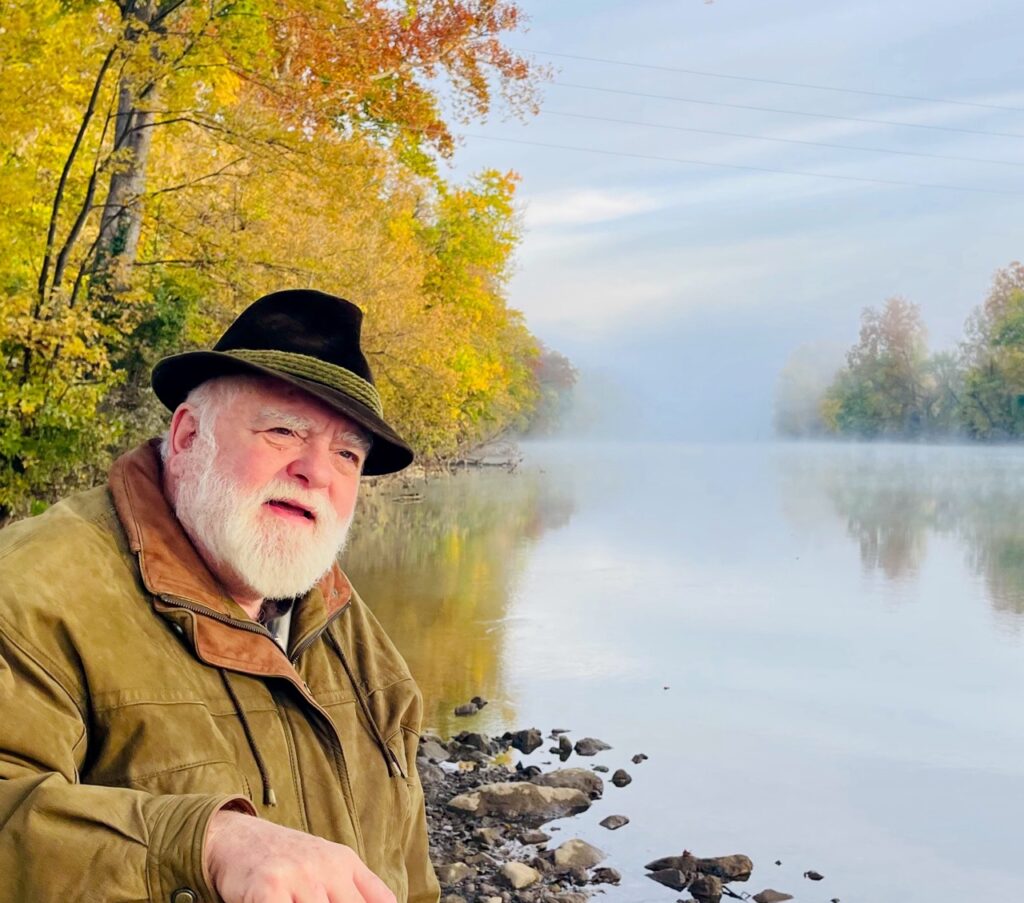
Photo Credit: John Waugh – on the Shenandoah
References
Aho, Kevin (2015). Heidegger, ontological death, and the healing professions. Med Health Care and Philos DOI 10.1007/s11019-015-9639-4
Hill Country Alliance (2024). Leading by Example: Ordinances and Tools for Growing Hill Country Communities. Second Edition – May 2024. Retrieved online on Jan 29, 2026 at https://hillcountryalliance.org/wp-content/uploads/LBE_Guidebook_05.08.24.pdf
Martínez-Radl, F. B., Hinton, D. E., & Stangier, U. (2023). Susto as a cultural conceptualization of distress: Existing research and aspects to consider for future investigations. Transcultural psychiatry, 60(4), 690–702. https://doi.org/10.1177/13634615231163986
Westward Environmental, 2024. Conservation Starts with Understanding the Trinity Aquifer. Retrieved online on Jan 29, 2026, at https://westwardenv.com/conservation-starts-with-understanding-the-trinity-aquifer/)